




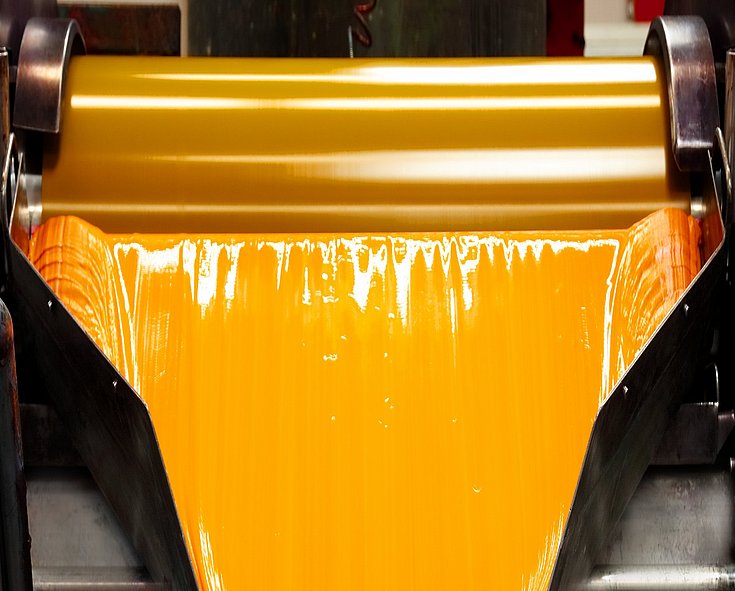
Colors are passion, emotions and personality. At Siegwerk, inks and coatings are our specialty and we use color to bring the packaging and products of our customers to life.

There is no one-size-fits-all approach to packaging circularity. Every packaging application comes with specific requirements related to product protection, packaging performance, recyclability, material use, and other environmental considerations.
That is why we work closely with our customers to develop tailored packaging solutions based on the requirements of each application. Drawing on our expertise across the packaging value chain, we help brand owners, packaging manufacturers, and converters evaluate different design options and make informed packaging decisions.
Packaging design requires the consideration of multiple factors. These can include material selection, functionality, product safety, recyclability, resource efficiency, and end-of-life requirements. By looking at how these factors interact, we help customers identify approaches that meet the specific requirements of their packaging application.
We also monitor developments across the packaging value chain, including regulatory requirements, recycling infrastructure, technologies, and market needs. This enables us to support customers in evaluating packaging solutions in light of changing requirements while maintaining the functionality, safety, and performance required for their specific application.
Packaging design involves balancing a range of requirements. Depending on the application, these may include recyclability, material use, recycled content, carbon footprint, product protection, functionality, and processing efficiency.
Changes to one aspect of a packaging structure can influence others. For example, a change intended to support recyclability may affect material or performance requirements, while the use of recycled content can influence processing or packaging performance. This makes it important to evaluate the relevant factors in the context of each specific packaging application.
With expertise across the packaging value chain, Siegwerk helps brand owners, converters, and packaging manufacturers evaluate these different requirements and understand potential trade-offs. We consider factors such as packaging materials, inks and coatings, recyclability, resource efficiency, carbon footprint, recycled content, product protection, and end-of-life requirements to support customers in identifying solutions that meet their defined priorities.
Packaging recyclability can be improved through the use of recycling-friendly materials, optimized package design, and carefully selected inks, coatings, and adhesives. The goal is to create packaging that supports existing recycling streams and enables the recovery of high-quality recycled materials.
There is no one-size-fits-all answer. The right balance depends on the packaging application, product requirements, and sustainability goals. In many cases, sustainable packaging requires trade-offs between recyclability, carbon footprint reduction, resource efficiency, and product protection.
Many sustainability criteria influence one another. For example, a material with lower greenhouse gas emissions may be less recyclable, while a highly recyclable solution could require additional material. Evaluating packaging performance across its entire lifecycle helps companies understand these trade-offs and make informed decisions.
Siegwerk works closely with customers across the packaging value chain to improve packaging sustainability. Our expertise includes recyclability, circular economy solutions, packaging design, regulatory compliance, sustainable inks, and functional coatings. We help customers evaluate different packaging options and identify the best path toward their sustainability goals.
Key considerations include recyclability, carbon footprint, recycled content, material efficiency, product protection, resource conservation, and compliance with regulatory requirements. The most effective packaging solution balances these factors according to the needs of the specific application.
Balancing performance and sustainability requires a holistic approach. Packaging must protect the product, meet operational requirements, and support sustainability ambitions. By evaluating the entire packaging system, companies can make informed decisions that improve environmental performance without compromising functionality.
The circular economy aims to keep packaging materials in use for as long as possible through reuse, recycling, and resource-efficient design. Packaging designed for circularity can help reduce waste, conserve resources, and support long-term sustainability goals.